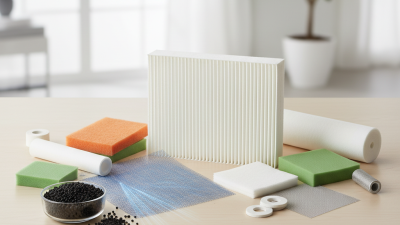
Top 10 Air Filtration Media Options for Global Buyers?
Air Filtration Media is crucial for maintaining a healthy indoor environment. With rising concerns about air quality, choosing the right filtration media is essential for buyers globally. Different types of media cater to various needs, including residential, commercial, and industrial applications.
Understanding the range of options helps buyers make informed decisions. Some materials effectively trap allergens, while others combat odors or harmful particles. Each media type has specific benefits and limitations, making it essential to evaluate them carefully. Buyers must consider factors like efficiency, cost, and maintenance requirements.
Navigating these options can be challenging. Some choices may not perform as expected. It’s vital to consult experts or trusted resources. Researching and understanding key factors can lead to better choices. Picking the right Air Filtration Media significantly impacts air quality and health. A thoughtful approach to selection can result in cleaner, safer indoor spaces.
Overview of Air Filtration Media and Their Importance
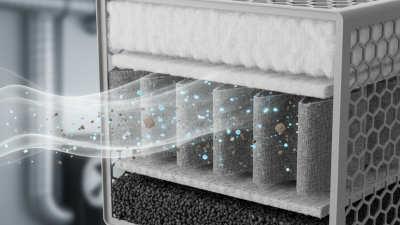
Air filtration media play a crucial role in maintaining air quality. They remove harmful particles and allergens from the air we breathe. With rising pollution levels, the demand for effective filtration solutions has increased significantly.
Various types of air filtration media are available today. HEPA filters are among the most popular due to their high efficiency in trapping small particles. Activated carbon is also widely used; it effectively absorbs odors and volatile organic compounds. However, not every media is suitable for all applications. The choice depends on the specific needs of the users and the environment.
Some buyers overlook the importance of regular filter maintenance. A clogged filter can be less effective and may even worsen air quality. Additionally, the longevity of media varies. Understanding this can help consumers make informed decisions. The key lies in balancing effectiveness and cost, often leading to reflection on their overall air quality needs.
Types of Air Filtration Media: A Comprehensive Classification
When exploring air filtration media, it's essential to understand the various types available. Each type serves a unique purpose in improving air quality. Some common categories include HEPA filters, activated carbon filters, and electrostatic precipitators. HEPA filters are renowned for capturing small particles, making them ideal for hospitals and laboratories. Activated carbon filters excel in odor removal, using adsorption to trap gases and volatile compounds.
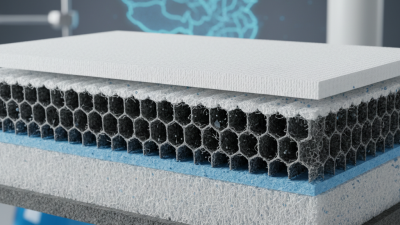
Electrostatic precipitators use charged plates to remove particles from the air. While efficient, they can be costly and require regular maintenance. Another type is synthetic media that blends materials for specific needs. These media can be customized based on the environment and specific pollutants. The effectiveness of air filtration media often depends on the specific application and the contaminants present.
Despite advances in technology, some air filtration methods can fall short. Their efficiency may vary, influenced by factors like airflow and filter design. Users should evaluate their unique needs before selecting a filtration media. Knowledge of the types available empowers buyers to make informed decisions for healthier indoor environments. Understanding these options allows for better air quality management in homes and workplaces.
Top 10 Air Filtration Media Options for Global Buyers
| Type of Media |
Efficiency (%) |
Applications |
Lifespan (Months) |
Cost (per unit) |
| HEPA Filter |
99.97 |
Residential & Commercial |
12 |
$30 |
| Activated Carbon |
80 |
Odor Control |
6 |
$25 |
| Electrostatic Filter |
90 |
HVAC Systems |
12 |
$35 |
| Fiberglass Filter |
70 |
Pre-Filter |
3 |
$10 |
| MERV 13 Filter |
95 |
Residential |
9 |
$20 |
| Pleated Filter |
85 |
Home & Office |
6 |
$15 |
| K95 Filter |
99.9 |
Commercial |
12 |
$45 |
| Bag Filter |
90 |
Industrial |
18 |
$50 |
| Washable Filter |
80 |
Home Use |
24 |
$40 |
| Synthetic Filter |
95 |
Allergen Control |
12 |
$30 |
Factors to Consider When Selecting Air Filtration Media
Selecting the right air filtration media is essential for effective air quality management. Several factors come into play when making this decision. One key consideration is the type of particles that need to be filtered. Different environments may have specific pollutants, such as dust, pollen, or smoke. Understanding these pollutants helps in selecting appropriate materials.
Another critical aspect is the efficiency of the filtration media. Higher efficiency ratings often correlate with better performance. However, this may also lead to higher pressure drops, which can affect airflow. Balancing filtration efficiency with airflow is essential. Users might face challenges finding the right compromise.
Additionally, cost and lifespan of the media are worth examining. Cheaper options may not always provide the expected benefits. They could wear out quickly, leading to increased replacement costs. Similarly, installation requirements should not be overlooked. Ensure that the chosen media can fit existing systems without extensive modifications.
Often, buyers find themselves reflecting on these nuances during their selection process, realizing the importance of making informed choices.
Top 10 Air Filtration Media Options for Global Buyers
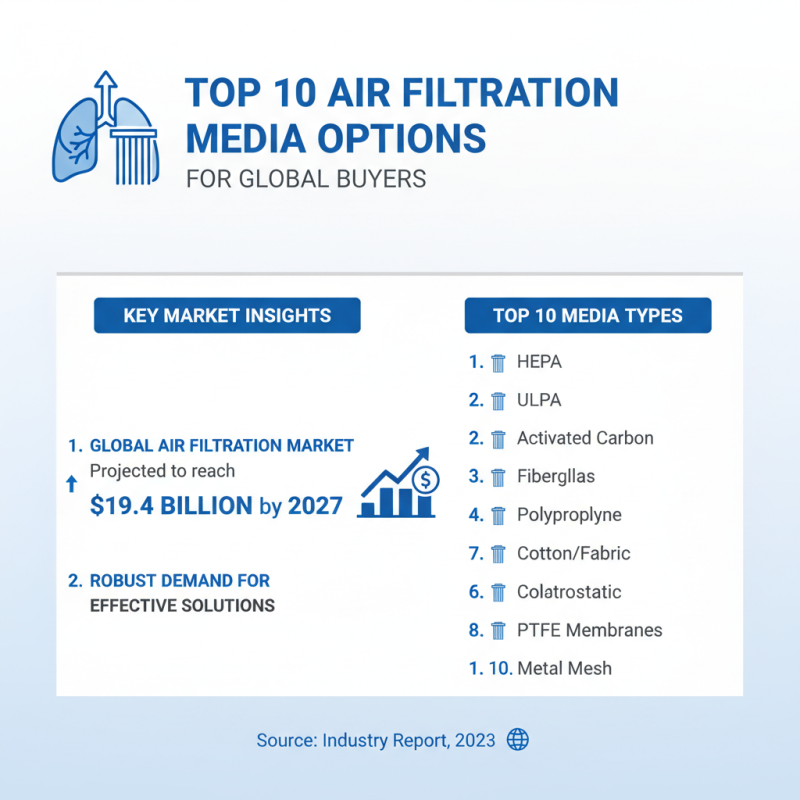
When considering air filtration media, understanding the options available is crucial for global buyers. The market for air filtration is projected to grow significantly. According to a recent industry report, the global air filtration market is expected to reach $19.4 billion by 2027. This growth indicates a robust demand for effective air filtration solutions.
One popular option is HEPA filters, known for trapping 99.97% of particles as small as 0.3 microns. They are commonly used in medical facilities and homes. Another notable choice is activated carbon filters, which excel in removing odors and volatile organic compounds (VOCs). The advantages here are clear, but one must consider the lifespan and replacement costs of these filters.
Electrostatic filters are gaining traction. They attract particles via an electric charge. Reports indicate that they can capture smaller particles than traditional filters but they may require regular maintenance to maintain effectiveness. Understanding the trade-offs between different media options helps buyers make informed decisions. Selecting the right media isn’t just about efficiency; it also involves evaluating cost and sustainability measures.
Comparative Analysis of Performance and Cost for Each Media Type
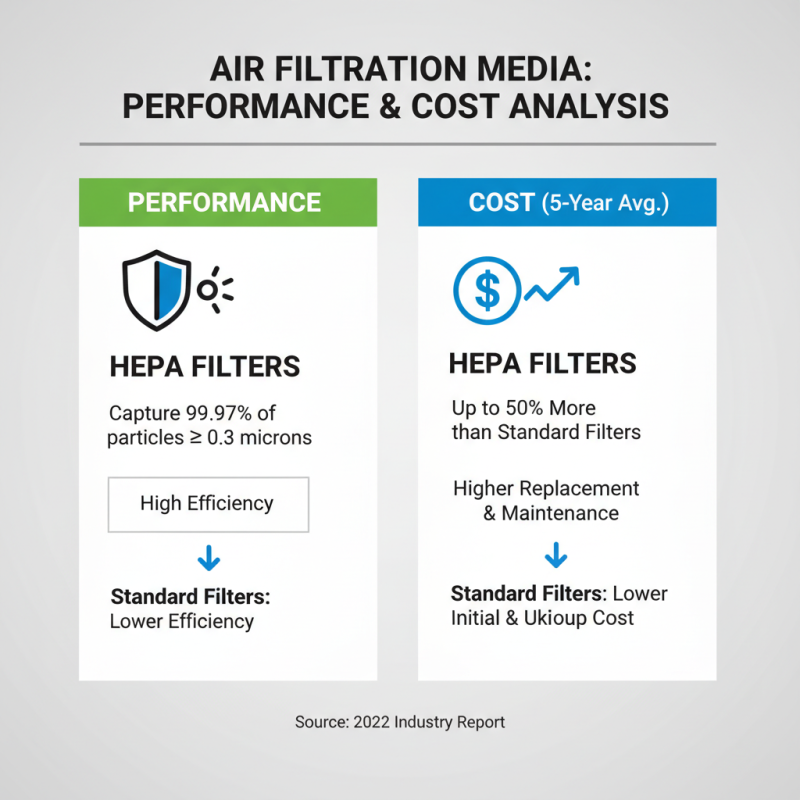
When selecting air filtration media, performance and cost are paramount. Various options exist, each with unique characteristics. For instance, HEPA filters can capture 99.97% of particles down to 0.3 microns. Their performance makes them a popular choice. However, they may be costly to replace and maintain. A 2022 industry report suggests that HEPA filters can cost up to 50% more than standard filters over five years due to maintenance and replacement needs.
Electrostatic filters provide an alternative with lower initial costs. They can trap smaller particles efficiently but may require frequent cleaning. The trade-off here lies in their longevity versus performance consistency. A study indicated that some electrostatic options showed a performance drop after several washes, leading to inconsistent air quality.
Tip: Consider long-term costs over upfront expenses. Sometimes, higher-quality media can save you money in the long run.
Pleated filters are another viable option. They strike a balance between efficiency and cost. Although pleated filters may capture around 80% of the airborne particles, their life span often exceeds that of basic filters. Yet, you may need to account for the fact that this efficiency can decline in high-pollutant areas.
Tip: Regularly assess air quality and filter performance to ensure optimal functionality. It’s a crucial step to avoid health risks from poor air quality.