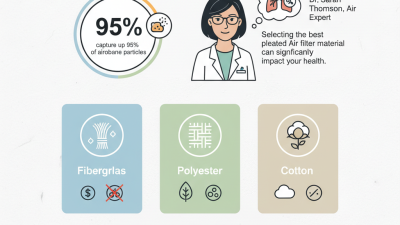
In 2026, the best Air Filtration Media is not automatically the densest or most expensive option. It depends on particle size, airflow, humidity, energy use, and maintenance conditions. That distinction matters. A hospital isolation room, a school classroom, and a semiconductor facility need different filtration strategies.
The U.S. Environmental Protection Agency reports that indoor pollutant levels can be two to five times higher than outdoor levels. In some situations, concentrations may reach 100 times higher. The World Health Organization’s 2022 air-quality update also found that 99% of the global population lived with air exceeding its guideline limits. These figures strengthen the case for measured filtration, not marketing claims.
ASHRAE Standard 52.2 provides a recognized method for evaluating particle-removal performance through MERV ratings. ASHRAE Standard 241-2023 adds the idea of equivalent clean airflow for infectious-aerosol control. Together, they show why efficiency alone cannot define the best filter. Pressure drop, fan capacity, replacement intervals, and real installation quality matter equally. A filter can perform beautifully in a laboratory and disappoint inside a poorly sealed frame.
Joseph Allen, D.Sc., a healthy-buildings expert at Harvard T.H. Chan School of Public Health, has emphasized, “There is no silver bullet.” That warning remains useful. HEPA, electrostatic, activated-carbon, and synthetic fiber media each solve different problems. Some remove particles well but increase energy demand. Others target odors but do little against fine aerosols. The honest answer is less tidy, and that is exactly why buyers should compare verified test data, lifecycle costs, and actual operating conditions before choosing Air Filtration Media.
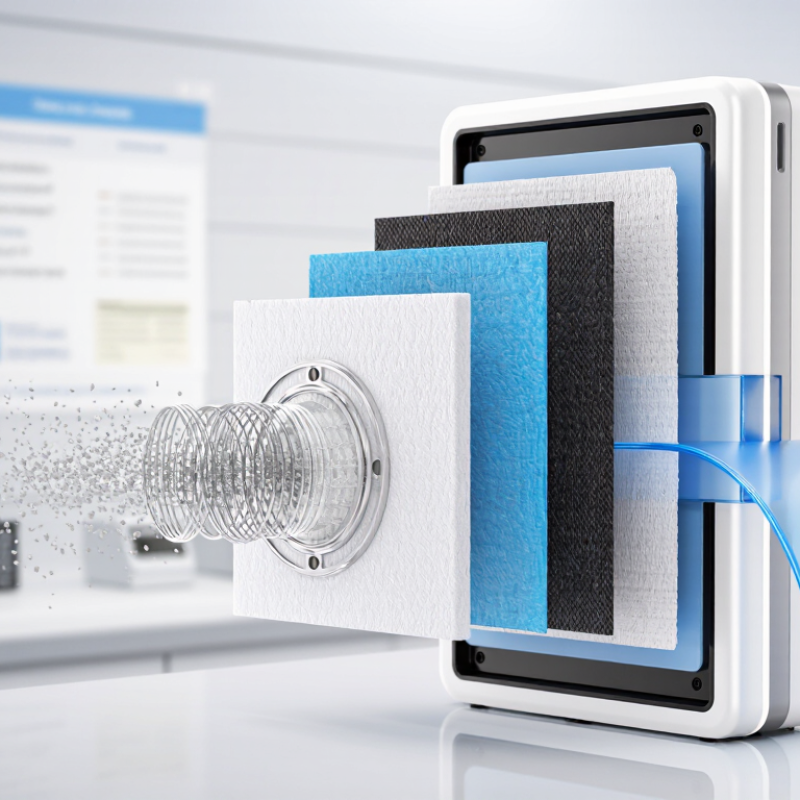
Choosing the best air filtration media in 2026 depends on the pollutant, airflow, and maintenance plan. A filter that performs well in a laboratory may behave differently in a dusty building.
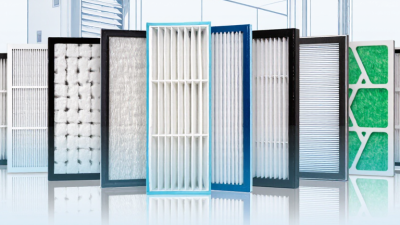
Fiberglass media is inexpensive and offers low airflow resistance. It mainly catches larger particles, such as lint and visible dust.
Synthetic media usually provides finer filtration and steadier performance. It can be a practical choice for offices, homes, and light industrial spaces. However, higher efficiency may increase pressure drop. The fan must work harder.
HEPA media captures at least 99.97% of particles around 0.3 microns under defined test conditions. This makes it valuable where fine particle control matters, including healthcare and controlled work areas.
Installation quality still matters. Small gaps can bypass excellent media. Carbon media works differently. It adsorbs many odors and gases, but performance depends on carbon weight, contact time, humidity, and the chemical involved. A thin carbon layer may lose capacity quickly.
Some systems combine synthetic or HEPA layers with carbon and prefilters. That arrangement can protect expensive final media from rapid loading.
In practical assessments, I would check pressure readings, replacement intervals, and the actual indoor contaminants before selecting media. Air filters are not magic. Even experienced technicians can overvalue efficiency numbers and overlook airflow, sealing, or neglected maintenance.
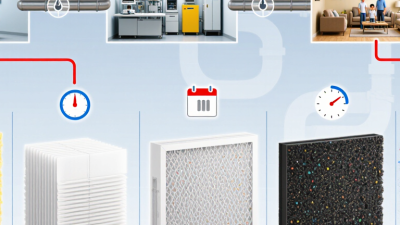
Choosing the best air filtration media in 2026 depends on particle control, airflow, and equipment capacity. MERV 13–16 media target particles from 0.3 to 10 microns. This range includes fine aerosols, dust, pollen fragments, and many respiratory droplets. The 0.3-micron point is not a perfect barrier. It represents a difficult test size for many filters.
ASHRAE Standard 52.2 rates MERV 13 media at roughly 50–75% efficiency for 0.3–1 micron particles. MERV 16 reaches at least 95% in this range under laboratory conditions. For 1–3 micron particles, MERV 13 generally achieves at least 85% efficiency.
Larger particles, from 3–10 microns, are captured more effectively through interception and impaction. The U.S. Environmental Protection Agency reports similar performance for MERV 13 or higher filters. However, these figures assume proper testing and installation.
Real buildings are less controlled. Air can bypass a poorly sealed filter. Dust loading can increase resistance. Fan performance may also decline. I would not treat MERV 16 as automatic proof of cleaner air. A field assessment should measure pressure drop, airflow, and filter fit. Higher efficiency helps, but excessive resistance can reduce ventilation. That tradeoff deserves more attention.
HEPA media is widely regarded as one of the strongest choices for fine-particle filtration. Its tested efficiency reaches 99.97% at 0.3 microns, a size often described as the most penetrating particle size. This result does not mean every particle is captured equally. Larger particles may be trapped more easily, while some smaller particles behave differently because of diffusion. The filter uses several mechanisms, including interception, impaction, and diffusion. Airflow passes through dense fibers, where particles collide with or cling to the structure.
The 0.3-micron figure comes from controlled laboratory testing. Real performance depends on more than the media itself. Poor sealing can let contaminated air bypass the filter. Excessive dust loading can also increase resistance and reduce airflow. A careful inspection should check the gasket, housing, pressure drop, and replacement schedule. Small gaps matter. In occupied spaces, I would rather see a correctly fitted filter operating at a steady airflow than a higher-rated filter installed carelessly. That judgment is not always convenient. It may also change after measuring indoor conditions, since humidity, dust levels, and fan capacity affect results. HEPA media can provide excellent protection, but only when the entire filtration system supports its performance.
Activated carbon is often judged by its surface area, but that number cannot tell the whole story. In practical testing, gas adsorption is commonly reported as milligrams of contaminant captured per gram of carbon. This measurement shows how much vapor the media holds under specific conditions. Those conditions matter. Temperature, humidity, gas concentration, contact time, and pore structure can change the result.
Surface area matters. A larger internal surface may provide more adsorption sites, especially within properly sized micropores. However, two carbons with similar BET surface areas can perform differently against the same gas. Surface chemistry and pore distribution influence attraction, diffusion, and release. A high value on a laboratory sheet may therefore create false confidence.
I would examine breakthrough curves, not only weight-based capacity. These curves show when a contaminant begins leaving the filter outlet. For example, a cartridge may adsorb strongly at low humidity but lose performance in damp air. Measuring pressure drop and carbon mass also helps evaluate real operating costs. One detail is easy to overlook: used media should be tested under the same airflow and humidity as the intended system. Otherwise, the comparison becomes neat but not very honest. Temperature changes can distort results. So can uneven packing.
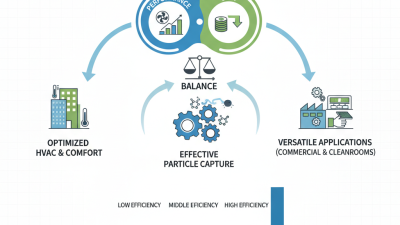
In 2026, the best air-filtration media is not automatically the highest-rated filter. Real selection balances efficiency, pressure drop, replacement cost, and fan energy. ASHRAE Standard 52.2-2017 measures particle removal across three size ranges. A MERV 13 filter, for example, must achieve at least 85% efficiency for 1–3 micrometre particles. That figure is useful, but incomplete. It does not predict every installed system.
Field experience shows why pressure readings matter. A clean, efficient filter can still overload a small blower when its face area is limited. The ASHRAE Handbook—HVAC Systems and Equipment (2024) treats airflow resistance as a key equipment-selection variable. Pressure drop rises as dust loads the media. Fan energy can then increase, especially with constant-volume controls. The U.S. Department of Energy connects excessive airflow resistance with higher operating effort, but the penalty depends on duct design, controls, and runtime. There is no universal energy percentage.
Cost includes the filter, labor, disposal, and electricity across its service life. The U.S. EPA’s Guide to Air Cleaners in the Home recommends checking efficiency and airflow compatibility together. Ask for initial and final pressure-drop data, not only a removal-efficiency headline. A deeper pleated filter may cost more, yet last longer. Sometimes it also uses less energy. Sometimes it does not. Occupancy, humidity, leakage, and maintenance change the answer. My practical preference is a properly sized MERV 13 filter when the fan maintains design airflow. Verify that choice with a manometer, not confidence.